

If you have received a text message that says OTP, you may have wondered what those three letters mean. In most everyday conversations, OTP has a very specific meaning,
especially when you are talking about online accounts, banking, shopping, or logging into a website.
OTP usually means “One-Time Password.” It is a temporary security code sent to your phone, email, or an authentication app.
You enter this code to confirm that you are the person trying to access an account or complete an action.
For example, you might receive a message like:
“Your OTP is 482916. Do not share this code with anyone.”
The number is normally valid for only a short period and can usually be used once.
However, OTP can have other meanings online. In texting, social media, fandoms, and casual internet conversations, people sometimes use OTP to mean “One True Pairing.”
This refers to a romantic couple that someone especially likes or supports.
So, the meaning depends heavily on the conversation.
If someone texts you, “Enter the OTP we sent to your phone,” they mean One-Time Password.
If someone says, “They are my OTP,” they probably mean One True Pairing.
Let’s take a closer look at both meanings, how people use OTP in text messages, and how you can understand which meaning someone intends.
What Does OTP Mean in Text?
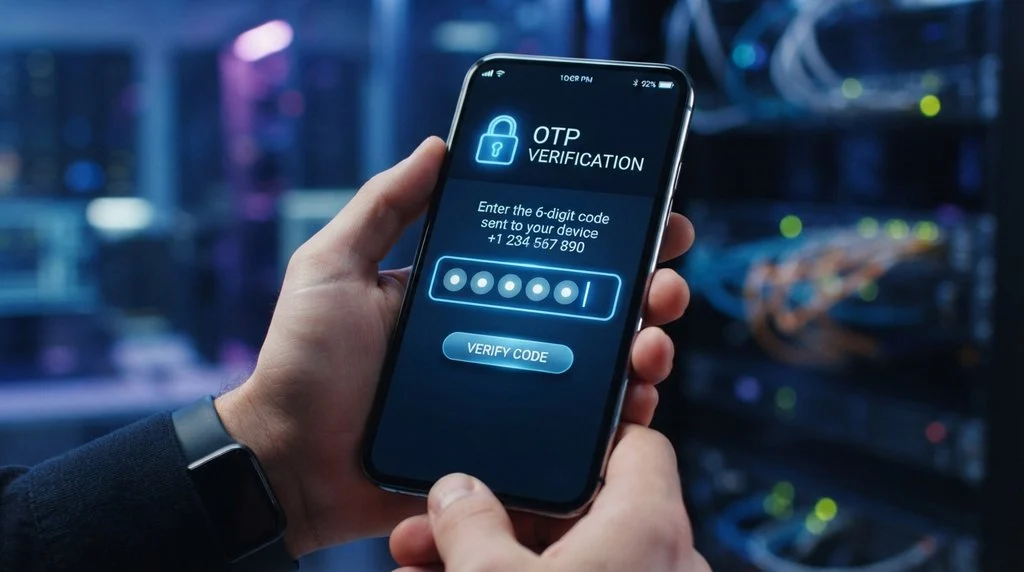
The most common meaning of OTP in a text message is One-Time Password.
A one-time password is a temporary security code used to verify your identity. Banks, social media platforms, shopping websites, email services, and other online platforms may send an OTP when you sign in or perform an important action.
An OTP might look like this:
- “Your verification code is 739201.”
- “Use 4826 to verify your phone number.”
- “Your OTP is 917354. It expires in 10 minutes.”
- “Enter the one-time password to continue.”
Unlike a normal password, an OTP is designed to be used temporarily. Once it has been used successfully, it normally cannot be reused.
This makes OTPs useful for adding another layer of security to online accounts.
Simple Example
Imagine you are logging into your bank account.
You enter your username and regular password. The bank then sends a six-digit code to your registered phone number.
You receive:
“Your OTP is 624891.”
You enter that code on the bank’s website. If everything matches, you can continue logging in.
In this situation, OTP clearly means One-Time Password.
What Does OTP Stand For?
OTP commonly stands for One-Time Password.
It can also be called a:
- One-Time Passcode
- Verification Code
- Security Code
- Authentication Code
- Temporary Password
These terms are not always technically identical, but people often use them in similar situations.
For example, a website might say “verification code” instead of “OTP,” even though the code serves essentially the same purpose.
The important idea is that the code is temporary and is used to verify that you have access to a particular phone number, email address, account, or authentication method.
Why Do Websites Send OTP Codes?
The main reason companies use one-time passwords is security.
A regular password can sometimes be stolen, guessed, or accidentally shared. An OTP adds another step to the login or verification process.
For example, suppose someone knows your username and password. If your account also requires an OTP sent to your phone, the person may not be able to complete the login without that additional code.
This is one form of two-factor authentication, often called 2FA.
An OTP may be required when you:
- Log into an account
- Reset a password
- Verify your phone number
- Confirm an online payment
- Add a new device
- Change security settings
- Create a new account
- Recover an account
- Confirm an important transaction
The exact process varies from one service to another.
What Does OTP Mean When Someone Texts You?
If a person sends you a message containing the word OTP, you need to look at the surrounding words.
For example:
“Did you get the OTP?”
This probably refers to a verification code.
“Send me the OTP.”
This may also refer to a security code. However, be careful: you generally should not share a security code with another person unless you are completely certain why it is needed and who you are dealing with.
Now consider this:
“Harry and Hermione are my OTP.”
Here, OTP does not mean a security code. It means One True Pairing, a term commonly used by fans when talking about fictional relationships.
That is why context matters.
OTP Meaning in Social Media
On social media, OTP can have several meanings.
The most common depends on the type of conversation.
In account-related conversations, OTP usually means One-Time Password or One-Time Passcode.
For example:
“Instagram asked me for an OTP when I logged in.”
In this sentence, the person is talking about account verification.
In fandom conversations, however, OTP often means One True Pairing.
For example:
“They will always be my OTP.”
The person is probably saying that the two characters are their favorite romantic pairing.
You may see this meaning on platforms such as TikTok, X, Reddit, Tumblr, Instagram, Discord, or fan communities.
OTP Meaning in Chat
In casual chat, OTP can be confusing because people may use the abbreviation without explaining it.
If someone says:
“I just got an OTP.”
They may be talking about a security code.
If someone says:
“Those two are definitely my OTP.”
They are almost certainly talking about a favorite couple or pairing.
The easiest way to understand the meaning is to consider what the conversation is about.
If the conversation is about:
- Banking → OTP probably means One-Time Password
- Online shopping → likely One-Time Password
- Login verification → One-Time Password
- Account security → One-Time Password
- Phone verification → One-Time Password
- Movies or TV shows → possibly One True Pairing
- Anime → possibly One True Pairing
- Books → possibly One True Pairing
- Fanfiction → possibly One True Pairing
- Celebrity couples → possibly One True Pairing
Context usually makes the meaning clear.
What Does OTP Mean in Banking Text Messages?
Banks frequently use OTPs to verify important actions.
For example, a bank might send:
“Use 348921 as your OTP to complete this transaction.”
Here, OTP means One-Time Password.
The code is intended to confirm that the person making the transaction has access to the registered phone or authentication device.
You should treat these messages carefully. A genuine OTP message does not mean you should automatically give the code to someone who asks for it.
If someone calls or messages you and says:
“I’m from your bank. Tell me the OTP you just received.”
That should be treated as a warning sign. Never share security codes simply because someone claims to be a bank employee, customer service representative, delivery agent, or another official.
If you are unsure, contact the organization using an official contact method.
Can You Share an OTP With Someone?
Generally, you should not share your OTP with another person.
An OTP is often designed to prove that you are the person trying to access an account or approve an action.
If someone asks you for the code, they may be attempting to use it themselves.
For example, imagine you receive:
“Your login code is 836291.”
Then someone messages you:
“Please send me the six-digit code you just received.”
Do not assume the request is safe.
Instead, verify what is happening through the official website or app.
This is especially important for banking, email, social media, shopping, and payment accounts.
What Does OTP Mean in Relationships and Fandoms?
OTP has another popular internet meaning: One True Pairing.
This is usually used by fans who strongly like a particular fictional or celebrity pairing.
For example:
“I have watched the series three times. Alex and Mia are still my OTP.”
The person is saying that Alex and Mia are their favorite pairing.
The term is particularly common in fandom culture.
You might see someone write:
- “They are my OTP.”
- “This is the best OTP.”
- “I can’t get over this OTP.”
- “My favorite OTP finally got together.”
- “I started shipping them after episode five.”
Here, OTP is not related to passwords or security.
What Is “One True Pairing”?
A One True Pairing is a favorite romantic pairing chosen by a fan.
The pairing might come from:
- A television show
- A movie
- A novel
- Anime
- Manga
- Video games
- Comics
- Fanfiction
- Celebrity culture
For example, a fan might call two fictional characters their OTP because they enjoy their chemistry or story.
It does not necessarily mean that the pairing is officially together in the story. A fan can have an OTP even when the characters never become a couple.
OTP vs. Shipping
If you spend time on social media fandom communities, you may also encounter the word ship.
“Shipping” means supporting or imagining a romantic relationship between two people or fictional characters.
An OTP is a particularly important or favorite pairing for that person.
For example:
“I ship them.”
means the person likes the idea of the two characters being together.
While:
“They are my OTP.”
usually expresses a stronger personal preference for that particular pairing.
The exact way people use these terms can vary between online communities.
OTP Meaning on Instagram
On Instagram, OTP can mean different things depending on the post, direct message, or comment.
If someone is discussing logging into an account, OTP probably means One-Time Password.
Example:
“Instagram sent an OTP to my phone.”
If the conversation is about a television show or celebrity couple, OTP could mean One True Pairing.
Example:
“These two are my OTP!”
The surrounding content usually provides the clue.
OTP Meaning on Snapchat
On Snapchat and other messaging platforms, OTP may also refer to a verification code.
For example:
“Snapchat sent me an OTP.”
means the user received a temporary security code.
But in a fandom discussion, someone might say:
“They are my OTP.”
Again, the meaning changes according to context.
Abbreviations can be confusing because the same three letters can represent completely different ideas.
OTP Meaning on TikTok
TikTok has made internet abbreviations even more common because people communicate quickly through captions, comments, direct messages, and short videos.
You may see OTP used in fandom-related videos such as:
“My OTP finally became canon!”
In this case, the creator is talking about a romantic pairing.
You might also encounter OTP in videos discussing account security or verification.
The topic of the video usually tells you which meaning applies.
Common Text Examples Using OTP
Here are some simple examples to make the difference easier to understand.
Example 1: Security
Person A: “Did the website send you an OTP?”
Person B: “Yes, I just entered it.”
Here, OTP means One-Time Password.
Example 2: Banking
Message: “Your OTP for this transaction is 582614.”
This is a security code.
Example 3: Account Login
Person A: “I can’t log in because I’m not receiving the OTP.”
Again, this means One-Time Password or verification code.
Example 4: Fandom
Person A: “Who is your OTP from the show?”
Person B: “Definitely Sam and Lily!”
Here, OTP means One True Pairing.
Example 5: Social Media
Comment: “They’ve been my OTP since season one.”
This is referring to a favorite romantic pairing.
Is OTP a Slang Word?
OTP is better described as an internet abbreviation than traditional slang.
Its meaning depends on where it is used.
“One-Time Password” is a technical and security-related term.
“One True Pairing” is an internet and fandom expression.
Because both meanings are common online, people may simply write “OTP” without spelling out the words.
This is similar to other online abbreviations such as LOL, BRB, BTW, IDK, and FYI.
However, OTP is slightly different because its two major meanings belong to very different contexts.
Is OTP the Same as a Password?
Not exactly.
A normal password is usually created by you and may remain valid until you change it.
An OTP is temporary and is generally intended for a single use or a short period.
For example:
Regular password:
A password you create for an account.
OTP:
A temporary code sent to verify an action.
Some authentication systems use OTPs as part of a larger security process.
How Long Does an OTP Last?
The exact expiration time depends on the service.
Some OTPs may remain valid for only a few minutes. Others may have a different expiration period.
You should always follow the instructions provided by the service that sent the code.
If an OTP expires, you may need to request a new one.
It is also possible for a new code to make an earlier code invalid.
Why Did I Receive an OTP I Didn’t Request?
If you receive an unexpected OTP, do not immediately panic.
There are several possible explanations.
Someone may have entered your phone number or email address by mistake. Alternatively, someone may be trying to access an account associated with your information.
The important thing is not to share the code.
If the message relates to an account you own, check your account activity through the official app or website. If you believe someone is attempting to access your account, consider changing your password and reviewing your security settings.
For financial accounts, contact your bank through its official support channel if the message concerns an unfamiliar transaction.
What Should You Do If Someone Asks for Your OTP?
Be cautious.
A legitimate service may ask you to enter an OTP into its own website or app. That is different from giving the code directly to another person through a phone call, text, chat, or social media message.
If someone says:
“Send me the OTP so I can verify your account.”
Stop and verify the request independently.
Do not rely only on the phone number, profile, or message used to contact you.
Scammers can sometimes pretend to represent companies or organizations.
Other Meanings of OTP
Although One-Time Password and One True Pairing are the most recognizable meanings online, abbreviations can have other meanings in specific industries or communities.
For that reason, context is always important.
If you see OTP in a professional document, technical discussion, game, workplace conversation, or specialized community, it may have a meaning specific to that subject.
Still, in everyday internet conversations, the two meanings discussed above are the ones most people are likely to encounter.
How to Know Which OTP Meaning Someone Means
When you see “OTP,” ask yourself three simple questions:
1. What are they talking about?
If the conversation involves logging in, payments, verification, or security, OTP probably means One-Time Password.
2. Is the conversation about characters or couples?
If people are discussing fictional relationships, celebrities, or fandoms, OTP probably means One True Pairing.
3. What words appear around it?
Look at the complete sentence.
For example:
“Enter your OTP.”
This is almost certainly a security code.
But:
“They’re my OTP.”
is likely talking about a favorite romantic pairing.
The surrounding words usually solve the mystery.
FAQs:
What does OTP mean in texting?
In texting, OTP most commonly means One-Time Password when the conversation is about account verification or security. In fandom conversations, it can mean One True Pairing.
What does OTP mean from a girl?
If a girl sends you “OTP,” there is no special meaning simply because she is a girl. Look at the context. She may mean One-Time Password, One True Pairing, or another context-specific abbreviation.
What does OTP mean from a guy?
The same rule applies. The sender’s gender does not determine the meaning. The surrounding conversation does.
What does OTP mean on social media?
On social media, OTP can refer to a One-Time Password in account-security situations or a One True Pairing in fandom and relationship discussions.
Is OTP safe to share?
A security OTP should generally be kept private. Never casually send a verification code to another person, especially when it is connected to banking, payments, email, or account access.
Does OTP always mean One-Time Password?
No. It is one of the most common meanings, but online fandom communities frequently use OTP to mean One True Pairing.
Why did I get an OTP message?
You may have requested a login, account verification, password reset, transaction confirmation, or another security action. If you did not request it, avoid sharing the code and check the relevant account through an official channel.
Final Thoughts:
The meaning of OTP in text depends on the situation.
In most account, banking, shopping, and verification conversations, OTP means One-Time Password or a temporary verification code. It helps confirm your identity and adds another layer of security.
In fandom and social media conversations, OTP can mean One True Pairing, which describes a person’s favorite romantic pairing between fictional characters or sometimes real people.
The easiest way to understand the abbreviation is to look at the context.
If someone says, “Enter the OTP,” they are probably talking about a security code.
If someone says, “They are my OTP,” they are probably talking about a favorite couple.
And if the OTP is a security code, remember one important rule: keep it private and never share it casually with someone who asks for it.
Once you understand these two common meanings, seeing “OTP” in a text, comment, or social media post becomes much easier to understand.
Discover more post:
| https://meaninggly.com/wya-meaning/ |
| https://meaninggly.com/what-does-demure-mean/ |
| https://meaninggly.com/clock-it-meaning/ |

Zoya is a passionate content writer and creative author with over 5 years of experience in writing engaging, informative, and SEO-friendly content. She specializes in English language topics, meanings, metaphors, literature, lifestyle, and creative writing.
She is currently working with MeaningGly, where she creates unique and reader-friendly articles that help people understand words, expressions, and modern language trends in a simple way.
2 thoughts on “What Does OTP Meaning Text Mean? Real Meaning, Examples”