
Have you ever seen someone reply with “You’re sol” or simply type “SOL” in a text message, comment section, or online conversation and wondered what it meant?
You’re not alone.
Internet slang changes fast, and some terms can be confusing because they have multiple meanings depending on the context. One of those terms is SOL.
While it looks simple, its meaning can vary between texting, social media, gaming, and everyday conversations.
In this guide, you’ll learn the sol meaning, where it comes from, how people use it, and when it’s appropriate to use it yourself. Let’s break it down in the simplest way possible.
What Does Sol Meaning Mean?
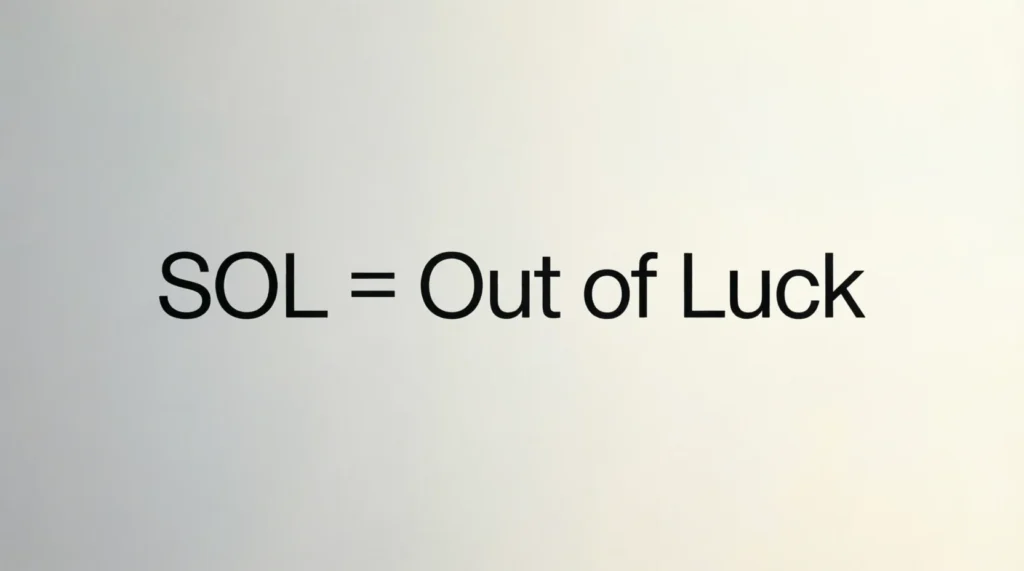
SOL is a slang abbreviation that most commonly stands for “Sh*t Out of Luck.”
It is used to tell someone that they are in an unfortunate situation and have no good options available.
Featured Snippet Definition
SOL means “Sh*t Out of Luck.” It is an informal slang expression used when someone is unlucky, stuck, or unable to change a bad situation. The term is commonly used in texting, social media, online forums, and casual conversations.
Simple Meaning
In simple words, SOL means you’re out of luck.
Imagine missing the last train home, forgetting your wallet, or finding out a concert is sold out after waiting all day.
Someone might say:
“Sorry, you’re SOL.”
What they mean is:
“Unfortunately, there’s nothing you can do about it.”
The phrase is often used jokingly, but it can also express genuine sympathy.
Easy Translation
- SOL = Out of luck
- SOL = No chance
- SOL = Stuck in a bad situation
- SOL = Nothing can be done
Where Is It Used?
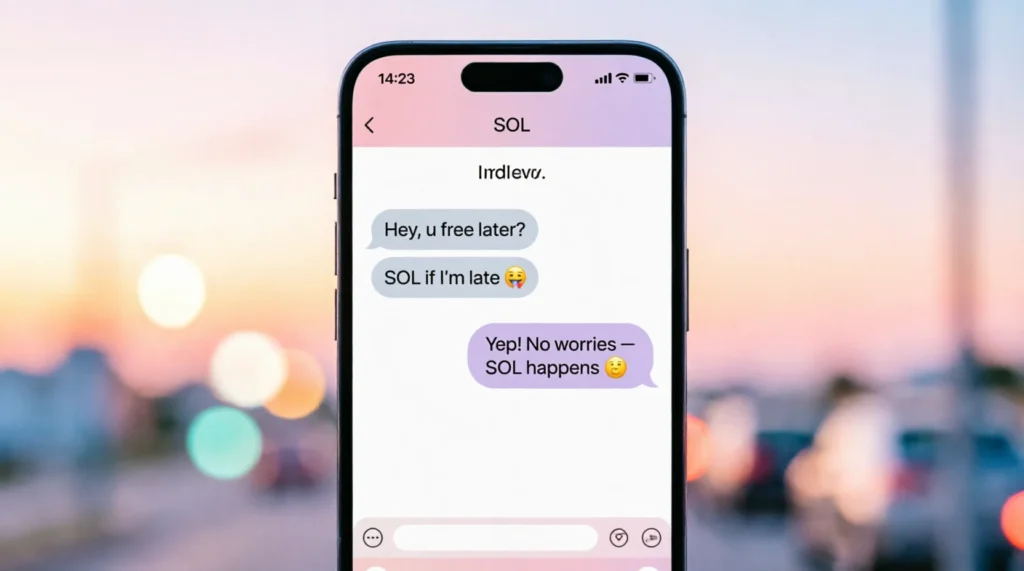
You can find the term SOL in many places online and offline.
Social Media
People use it on platforms like:
- TikTok
- X (Twitter)
- Snapchat
Example:
“Tickets sold out in five minutes. If you didn’t get one, you’re SOL.”
Text Messages
Friends often use SOL casually in chats.
Example:
“Forgot your password and don’t have recovery access? You’re SOL.”
Gaming Communities
Gamers use SOL when a player has no way to recover from a bad situation.
Example:
“The boss destroyed all our resources. We’re SOL now.”
Online Forums
Discussion boards frequently use SOL to describe difficult situations.
Example:
“If your warranty expired last year, you’re probably SOL.”
Everyday Conversations
Although it’s more common online, people sometimes say it in real life.
Example:
“The restaurant closes at 9 PM. It’s already 9:15. We’re SOL.”
Why Do People Use It?
There are several reasons why SOL remains popular despite being around for decades.
It’s Short and Fast ✅
Instead of saying:
“You are unfortunately out of options.”
People simply write:
“You’re SOL.”
It Adds Humor 😂
Sometimes people use SOL in a playful way to make a bad situation sound less serious.
Example:
“Forgot snacks for the movie? Guess we’re SOL.”
It Expresses Reality ⚠️
SOL quickly communicates that a problem has no easy solution.
Example:
“The application deadline passed yesterday. You’re SOL.”
It Fits Internet Culture 🔥
Online communication favors short abbreviations, and SOL is easy to type and understand.
Examples of Sol Meaning in Real Life
Let’s look at some practical examples.
Example 1: Concert Tickets
Did you get tickets?
No, they sold out.
Then we’re SOL.
Meaning: There are no tickets left.
Example 2: School Assignment
Student: Can I submit my project a week late?
Teacher: The grading period already ended.
Friend: Looks like you’re SOL.
Meaning: There’s no way to submit it now.
Example 3: Gaming
Player 1: We lost all our healing items.
Player 2: Great, we’re SOL.
Meaning: The team is in trouble.
Example 4: Travel
Traveler: I missed the last bus.
Friend: Ouch. You’re SOL.
Meaning: There are no transportation options left.
Example 5: Online Shopping
Customer: The item is sold out everywhere.
Friend: Yeah, you’re SOL until they restock.
Meaning: You’ll have to wait.
Sol Meaning vs Similar Terms
Many slang expressions have similar meanings. Here’s how SOL compares.
| Term | Meaning | Tone |
|---|---|---|
| SOL | Out of luck | Casual, blunt |
| Tough luck | Unfortunate situation | Mild |
| Out of luck | No chance available | Neutral |
| Too bad | Expression of sympathy | Friendly |
| No dice | Not possible | Informal |
| Game over | Situation is finished | Dramatic |
Key Difference
SOL is usually stronger and more direct than simply saying “tough luck.”
When Should You Use It?
Knowing when to use SOL is important.
Good Situations ✅
Use SOL when:
- Talking with friends
- Sending casual texts
- Participating in online discussions
- Making jokes about minor problems
- Discussing situations with no solution
Example:
“Missed the sale? You’re SOL.”
Situations to Avoid ⚠️
Avoid using SOL in:
- Professional emails
- Business meetings
- Academic papers
- Customer service conversations
- Formal communication
Example:
Instead of:
“You are SOL.”
Say:
“Unfortunately, there are no remaining options available.”
Common Misunderstandings
Because SOL can have multiple meanings, confusion sometimes happens.
Mistake #1: Assuming It Always Means “Out of Luck”
While slang users generally mean “Sh*t Out of Luck,” the letters SOL can represent other things depending on context.
Examples include:
- Statement of Liability
- Service-Oriented Logic
- Speed of Light (in some technical discussions)
- Sol (the sun in Latin-related contexts)
Always consider the conversation before assuming the slang meaning.
Mistake #2: Thinking It’s Extremely Offensive
The full phrase contains a mild profanity, but many people use the abbreviation without thinking about the original wording.
In casual online spaces, it’s generally accepted.
Mistake #3: Using It in Formal Writing
Even though it’s common online, it can appear unprofessional in workplace communication.
Pro Tips for Using SOL
Want to sound natural when using the term? Follow these tips.
Tip #1: Know Your Audience
Use SOL with friends and people familiar with internet slang.
Tip #2: Use It Sparingly
Overusing slang can make your communication feel repetitive.
Tip #3: Consider the Situation
If someone is dealing with a serious issue, SOL might sound insensitive.
Tip #4: Pair It With Context
Instead of simply saying:
“SOL.”
Say:
“The store sold out, so we’re SOL.”
This makes your meaning clearer.
Tip #5: Understand Tone
SOL can sound:
- Funny
- Sarcastic
- Sympathetic
- Frustrated
Your tone will determine how others interpret it.
Other Meanings of SOL
Although internet slang is the most common interpretation, SOL can also refer to:
Name
“Sol” is a personal name used in several cultures.
Astronomy
In astronomy-related discussions, Sol refers to the Sun.
Sol in Space Missions
A “sol” can mean a solar day on another planet, especially Mars.
Example:
“The rover completed its mission on Sol 150.”
This usage is completely different from the slang meaning.
FAQs:
What does SOL mean in texting?
In texting, SOL usually means “Sh*t Out of Luck.” It describes a situation where someone has no good options available.
Is SOL a bad word?
The abbreviation itself is not usually considered offensive, but it comes from a phrase that contains mild profanity.
Can SOL have other meanings?
Yes. Depending on the context, SOL can refer to astronomy, names, technical terms, or a solar day on Mars.
Is SOL still popular?
Yes. SOL continues to appear in texting, gaming communities, social media posts, and online forums because it is short, memorable, and easy to understand.
Final Thoughts:
The most common sol meaning online is “Sh*t Out of Luck.” It’s a casual slang term used when someone is stuck in an unfortunate situation and has few or no options left.
You’ll often see it in text messages, social media posts, gaming communities, and online discussions. While it’s useful for informal conversations, it’s best avoided in professional settings.
The next time someone tells you that you’re SOL, you’ll know exactly what they mean and hopefully, you won’t actually be out of luck. 😄
Discover more post:
| https://meaninggly.com/what-does-cs-mean/ |
| https://meaninggly.com/w-means-in-chat/ |
| https://meaninggly.com/what-does-igh-mean-in-text/ |

Aurora is a passionate content writer and language enthusiast with over 5 years of experience in creative writing, metaphors, similes, idioms, figurative language, and educational content creation. She specializes in producing easy-to-understand, engaging, and reader-friendly articles that help audiences explore the beauty of the English language.
As a dedicated author at MeaningGly, Aurora creates high-quality content focused on meanings, expressions, literary devices, vocabulary, and modern writing trends. Her writing style combines creativity with clarity, making complex language concepts simple and enjoyable for readers of all ages.