If you have ever received a text message that simply says “wat”, you may have wondered what the person actually means.
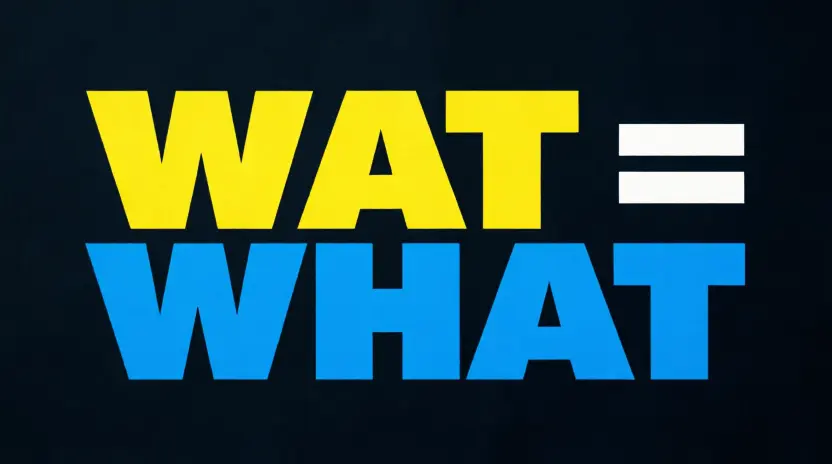
In most casual online conversations, “wat” is an informal way of writing “what.” People commonly use it in text messages, comments, chats, memes, gaming conversations, and social media posts.
Depending on the situation, it can express confusion, surprise, disbelief, or simply ask someone to repeat or explain something.
For example, someone might text:
“Wat are you talking about?”
This usually means:
“What are you talking about?”
The spelling is different, but the intended meaning is generally easy to understand from context.
However, there is more to this little internet expression than just a misspelling. The way someone writes “wat” can change the tone of a conversation. Sometimes it is playful.
Sometimes it shows genuine confusion. In memes and online communities, it can even be used deliberately to create a humorous or exaggerated reaction.
This guide explains what “wat” means in text, where it comes from, how people use it online, and how you can respond when someone sends it to you.
What Does “Wat” Mean in Text?
In texting and online communication, “wat” usually means “what.”
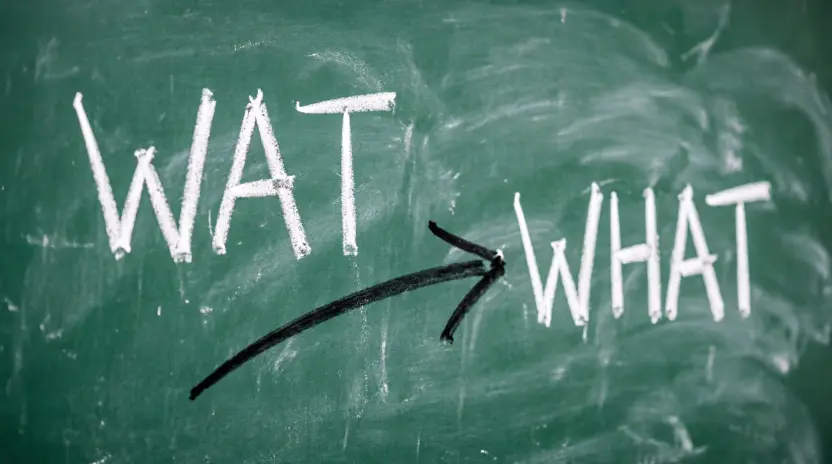
It is an informal spelling that leaves out the letter h. Unlike a standard abbreviation such as “brb” for “be right back,” “wat” is closer to an intentionally casual spelling of an ordinary word.
Here are a few simple examples:
- “Wat happened?” = “What happened?”
- “Wat do you mean?” = “What do you mean?”
- “Wat 😂” = “What? 😂”
- “Wat is this?” = “What is this?”
- “Wait, wat?” = “Wait, what?”
The exact feeling behind the word depends on the conversation.
Someone might use it because they are genuinely confused. Another person might use it jokingly after seeing something unexpected.
For instance:
Person 1: “I just bought a chicken costume.”
Person 2: “Wat?”
Here, “wat” probably expresses surprise or disbelief rather than a serious request for information.
Is “Wat” a Slang Word?
Yes, “wat” can be considered internet slang or informal online language, especially when it is used as a casual replacement for “what.”
It is not standard English spelling. You would generally avoid it in formal writing, academic assignments, business emails, professional documents, or official communication.
Online, however, people frequently bend spelling rules to make messages faster, shorter, more expressive, or humorous.
Other examples of informal internet spellings include:
- “u” for “you”
- “ur” for “your” or “you’re,” depending on context
- “r” for “are”
- “tho” for “though”
- “pls” for “please”
- “cuz” for “because”
- “gonna” for “going to”
“Wat” fits into this broader culture of casual digital communication.
The important thing is that informal spelling does not necessarily mean the person does not know the correct spelling. Often, they are choosing to write differently on purpose.
Why Do People Write “Wat” Instead of “What”?
There are several reasons someone might type “wat.”
1. It is quick and casual
Online conversations move quickly. People often do not worry about perfect spelling when chatting with friends.
Typing “wat” instead of “what” is simple and feels relaxed.
2. It can sound more humorous
Sometimes the unusual spelling is the point.
Compare:
“What?”
with:
“Wat?”
The second version can feel more exaggerated, silly, or playful.
That small spelling difference can give the message a different personality.
3. It can express disbelief
“Wat” is often used as a reaction to something surprising.
For example:
Friend: “I accidentally sent my homework to my boss.”
You: “Wat 😭”
The response does not necessarily ask for a detailed explanation. It communicates something closer to:
“Wait, seriously? What?”
4. Internet culture encourages unusual spellings
Memes, online communities, gaming, and social media have created many unconventional forms of language.
People sometimes intentionally change spelling to make a sentence sound funny or to imitate the style of internet conversations.
Because of this, words such as “wat” can carry a tone that goes beyond their dictionary meaning.
5. It may simply be a typo
Not every use has a hidden meaning.
Someone could type “wat” because they accidentally left out the h.
If the conversation is otherwise normal and serious, it may just be a typing mistake.
What Does “Wat” Mean on Social Media?
On social media, “wat” usually means “what,” but it is often used as a reaction.
You may see it in comments, captions, replies, memes, or short messages.
For example, imagine someone posts:
“I ate 15 burgers in one sitting.”
A commenter might write:
“Wat 😭”
In this case, the commenter is expressing surprise or disbelief.
On platforms where people communicate through very short comments, “wat” can work almost like a reaction emoji.
It can communicate:
- Confusion
- Surprise
- Shock
- Disbelief
- Amusement
- “What did I just read?”
- “Are you serious?”
- “Please explain.”
The surrounding content tells you which interpretation makes the most sense.
“Wat” vs. “What”: What Is the Difference?
The basic meaning is usually the same, but the tone can be different.
“What?” is standard English.
“Wat?” is informal and can sound more playful, surprised, confused, or internet-style.
Consider these examples.
“What are you doing?”
This is a normal question.
“Wat are you doing?”
This sounds much more casual and may intentionally imitate online slang.
Now consider:
“What?”
This could simply mean that you did not hear someone.
“Wat?”
This may sound more like a humorous reaction.
Neither interpretation is guaranteed, though. Context always matters.
Examples of “Wat” in Text Messages
Here are some realistic examples showing how people may use the expression.
Example 1: Asking for clarification
Person A: “I won’t be coming tomorrow.”
Person B: “Wat? Why?”
Here, “wat” means “what” and shows that the person wants an explanation.
Example 2: Expressing surprise
Person A: “I quit my job yesterday.”
Person B: “Wat 😳”
This probably means:
“What? You quit your job?”
The person is surprised.
Example 3: Reacting to something strange
Person A: “My cat opened the refrigerator.”
Person B: “Wat 😂”
The response expresses amusement and disbelief.
Example 4: Confusion
Person A: “Meet me at 6, but not at 6.”
Person B: “Wat?”
Here, the person is genuinely confused by the statement.
Example 5: Playful conversation
Friend: “I think pineapple belongs on every pizza.”
You: “Wat 😭”
This may be a humorous way of strongly disagreeing.
What Does “Wat?” Mean With a Question Mark?
Adding a question mark usually makes the meaning clearer.
“Wat?” generally means:
- “What?”
- “What do you mean?”
- “What happened?”
- “Seriously?”
- “Could you explain that?”
The emotional meaning depends on the conversation.
For example:
“Wat?”
can be a genuine question.
But:
“WAT???”
can suggest much stronger surprise or disbelief.
The use of capital letters and punctuation can dramatically change the tone.
What Does “WAT” Mean in Capital Letters?
When written as “WAT”, the expression may feel more dramatic.
For example:
“WAT??? HOW DID YOU DO THAT?”
The writer is emphasizing their reaction.
Capitalization can make the expression appear louder or more emotional, much like saying “WHAT?!” in spoken conversation.
However, uppercase WAT can also have meanings unrelated to the casual slang use of “wat.” In technical, professional, or specialized contexts, it could be an acronym.
That is why context is important.
Is “Wat” Rude?
Usually, “wat” is not inherently rude.
It is generally a casual and playful way to write “what.”
Still, tone matters.
For example:
“Wat do you want?”
could sound dismissive or annoyed depending on the relationship between the people.
Meanwhile:
“Wat 😂”
may be completely friendly.
If you are communicating with a teacher, employer, customer, client, or someone you do not know well, it is safer to use standard English:
“What do you mean?”
instead of:
“Wat?”
The spelling itself is not necessarily offensive, but informal language can sometimes appear careless or disrespectful in formal situations.
Is “Wat” the Same as “Wut”?
“Wat” and “wut” are very similar online expressions.
Both can be used as informal or humorous versions of “what.”
For example:
- “Wat is happening?”
- “Wut is happening?”
Both can communicate confusion or surprise.
There can be subtle differences in how people perceive them, but there is no universal rule.
In many internet conversations, the spelling is chosen simply because it looks funny or fits the writer’s preferred online style.
You may also encounter exaggerated forms such as:
- “wut?”
- “wat?”
- “waaat?”
- “whaaat?”
- “WAT??”
These are often designed to communicate emotion rather than follow standard spelling.
Is “Wat” the Same as “What”?
In casual texting, usually yes.
If someone writes:
“Wat are you doing?”
you can normally understand it as:
“What are you doing?”
The difference is primarily spelling and tone.
However, “wat” can also appear as an acronym or abbreviation in specialized contexts. For example, technical communities sometimes use short forms that have completely different meanings.
So, if you see WAT in a technical document, organization name, educational context, or professional discussion, do not automatically assume it means “what.”
Look at the surrounding words.
How Should You Respond When Someone Says “Wat”?
Your response depends on what the person seems to mean.
If they are asking you to explain something, simply provide the explanation.
For example:
Them: “Wat?”
You: “I mean that I won’t be able to come tomorrow.”
If they are reacting with surprise, you can clarify:
Them: “Wat?!”
You: “Haha, yeah. I actually got the job.”
If they seem confused:
Them: “Wat?”
You: “Sorry, I explained that badly. Let me explain.”
If they are joking, you can joke back.
Them: “Wat 😂”
You: “You heard me 😂”
There is no special response required. Treat it according to the conversation.
Common Phrases Using “Wat”
Because “wat” is simply an informal version of “what,” it can appear in many everyday sentences.
Here are some common examples:
“Wait, wat?”
A humorous way to show sudden confusion or surprise.
“Wat 😂”
A short reaction to something funny, strange, or unexpected.
“WAT?! No way!”
A dramatic reaction showing strong disbelief.
Can “Wat” Be Used in Formal English?
It is best not to use “wat” in formal English.
Formal communication should use the standard spelling “what.”
For example, instead of:
“Wat is the deadline?”
write:
“What is the deadline?”
Instead of:
“Wat do you mean by this?”
write:
“What do you mean by this?”
Standard spelling is especially important in:
- School assignments
- College applications
- Business emails
- Job applications
- Official documents
- Professional websites
- Academic writing
- Customer-service communication
Using internet slang in these settings can make your writing appear too casual.
When Is It Appropriate to Use “Wat”?
“Wat” is generally appropriate when you are having a casual conversation with people who understand internet slang.
It can work well in:
- Text messages
- Group chats
- Social media comments
- Gaming chats
- Memes
- Casual DMs
- Friendly conversations
Even in these situations, think about your audience.
A close friend may understand “wat” immediately. A person who rarely uses social media slang may find it confusing or assume it is simply a spelling mistake.
“Wat” in Gaming and Online Communities
Gaming communities have played a major role in the development and spread of informal internet language.
Gamers often communicate quickly during matches, streams, and group conversations. Short, exaggerated, and humorous expressions are common.
A player might say:
“Wat was that?”
after something unexpected happens during a game.
Or:
“WAT just happened?!”
after an unbelievable play.
In these environments, the expression is often less about saving typing time and more about communicating emotion quickly.
The same style appears in livestream chats, Discord communities, comment sections, and meme communities.
Why Context Matters So Much
One of the most important things to remember about internet slang is that the same word can have different meanings depending on context.
Suppose someone sends:
“Wat?”
They might be confused.
But if they send:
“Wat 😂”
they may be laughing.
If they write:
“WAT?!”
they are probably extremely surprised.
And if you see:
“WAT is a useful testing tool”
in a technical article, the word could be an acronym rather than slang.
This is why looking at the surrounding conversation is more useful than relying on a single dictionary definition.
Does “Wat” Mean “Why”?
No. “Wat” normally means “what,” not “why.”
These are different question words.
For example:
“Wat happened?”
= “What happened?”
“Why did it happen?”
asks for a reason.
Sometimes people use “wat” as part of an emotional reaction that indirectly asks for an explanation, but its literal meaning remains connected to “what.”
Does “Wat” Mean “Wait”?
Not usually.
This can be confusing because “wat” and “wait” look somewhat similar.
If someone writes:
“Wat?”
they almost certainly mean “what?” in a casual online conversation.
If they write:
“Wait!”
they are telling you to pause or stop.
However, in very informal typing, people may make unusual spellings, so context remains important.
Is “Wat” a Typo or Slang?
It can be either.
This is one of the most useful things to understand about online language.
If someone writes:
“Wat time is it?”
they may simply have typed quickly.
If someone comments:
“WAT 😭😭”
under a funny or unbelievable post, it is much more likely to be deliberate slang.
You can often tell from the rest of the message.
If the person’s messages contain normal spelling except for one missing letter, “wat” may be a typo.
If they consistently use informal spellings, emojis, abbreviations, and meme-style language, it is probably intentional.
Other Internet Expressions Similar to “Wat”
There are several expressions that can perform a similar function.
“Wut”
A playful version of “what.”
Example:
“Wut is going on?”
“Huh?”
A common way to show confusion or ask someone to repeat something.
Example:
“Huh? I didn’t hear you.”
“What?”
The standard version.
Example:
“What do you mean?”
“Whaaaat?”
An exaggerated form often used to express surprise.
Example:
“Whaaaat? You actually won?”
“WTF?”
A much stronger internet expression showing shock, confusion, or disbelief. It contains profanity, so it is not appropriate for every audience.
These expressions can overlap, but their tone is different.
Does “Wat” Have a Positive or Negative Meaning?
By itself, “wat” is neither positive nor negative.
Its emotional meaning comes from the situation.
For example:
“Wat 😂 that’s hilarious.”
This is positive or amused.
But:
“Wat are you even doing?”
could sound annoyed.
And:
“Wat?! You won?”
shows surprise.
The word itself does not tell you exactly how the writer feels. Punctuation, emojis, capitalization, and surrounding sentences provide the clues.
Why Internet Slang Changes So Quickly
Online language is constantly evolving.
New expressions can become popular through memes, videos, gaming communities, social platforms, and viral posts. A spelling that once looked unusual can become familiar to millions of people.
Internet slang also changes because people enjoy experimenting with language.
They shorten words, change spellings, combine expressions, create acronyms, and use punctuation creatively.
That is why understanding online language requires more than memorizing definitions. You also need to understand tone and context.
A word like “wat” is a good example.
It is technically an unconventional spelling, but online it can communicate a recognizable reaction almost instantly.
FAQs:
What does “wat” mean in a text message?
In most text messages, “wat” means “what.” It is an informal spelling commonly used in casual online conversations.
Is “wat” an abbreviation?
It can be described as an informal shortened or altered spelling of “what.” It is not a standard English abbreviation.
Is “wat” proper English?
No. The standard spelling is “what.” “Wat” is generally considered informal internet language.
Is “wat” rude?
Not necessarily. It is usually casual or playful, but the tone can become rude depending on the surrounding conversation.
What does “wat?” mean?
“Wat?” usually means “What?” and can express confusion, surprise, disbelief, or a request for clarification.
What does “WAT???” mean?
Capital letters and multiple question marks make the reaction more dramatic. It can mean something like “WHAT?!” or “Seriously?!”
Can I use “wat” with friends?
Yes. It is generally suitable for casual conversations with friends or people who are comfortable with internet slang.
Should I use “wat” in an email?
For professional or formal emails, it is better to use “what.” Standard English is more appropriate in professional communication.
Is “wat” the same as “wut”?
They are very similar. Both can be used online as playful versions of “what,” especially to express confusion or surprise.
Can “WAT” have another meaning?
Yes. In specialized contexts, WAT can be an acronym with meanings unrelated to the slang expression. Always check the context before deciding what it means.
Final Thoughts:
So, what does “wat” mean in text?
In most casual online conversations, it is simply an informal, playful way of writing “what.”
People may use it to ask a question, show confusion, express surprise, or react humorously to something unexpected.
The spelling itself is not usually important. What matters most is the tone and context.
If someone texts:
“Wat?”
they may simply be asking you to explain something.
If they write:
“WAT?! 😂”
they are probably reacting strongly to something surprising or funny.
And if you see the word in a formal or technical setting, remember that it may have a completely different meaning.
The safest rule is simple: use wat when the conversation is casual and the people involved understand internet slang. Use “what” in formal writing.
Once you understand that distinction, this small piece of internet language becomes much easier to recognize and interpret.
Discover more post:
| https://meaninggly.com/gta-meaning/ |
| https://meaninggly.com/wdp-meaning-in-text/ |
| https://meaninggly.com/sfw-meaning/ |

Zoya is a passionate content writer and creative author with over 5 years of experience in writing engaging, informative, and SEO-friendly content. She specializes in English language topics, meanings, metaphors, literature, lifestyle, and creative writing.
She is currently working with MeaningGly, where she creates unique and reader-friendly articles that help people understand words, expressions, and modern language trends in a simple way.
2 thoughts on “What Does wat Mean in Text? Real Meaning”